
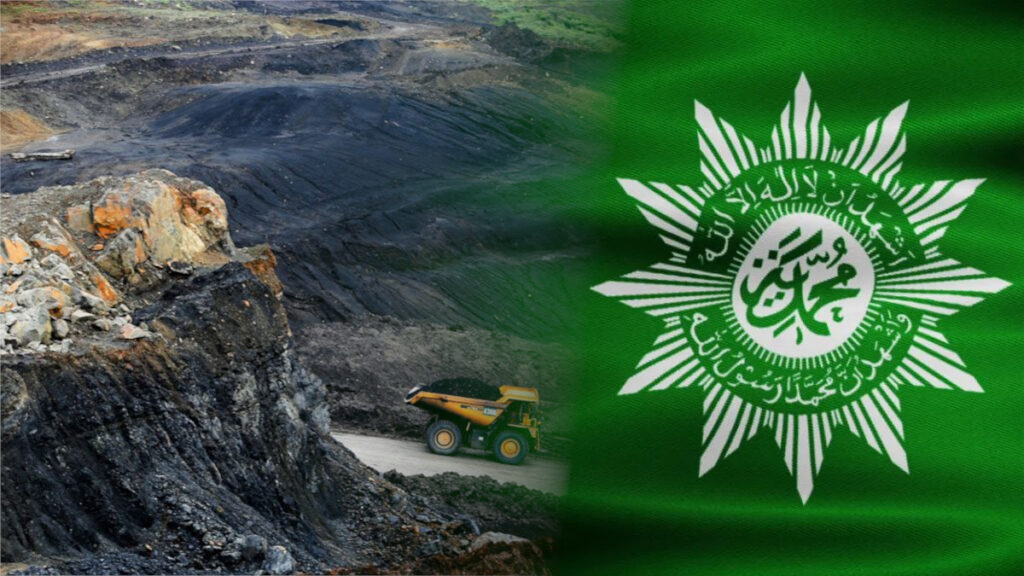

Muhammadiyah, as a religious organization, has grown to become the largest and oldest organization in Indonesia. Unfortunately, the decision made by Muhammadiyah regarding mining business licenses has disappointed many Indonesians, especially members of Muhammadiyah. On Sunday, July 28, 2024, the Muhammadiyah Council officially announced that it had accepted the offer to manage a mine. In a national Muhammadiyah consolidation meeting, they stated, “This decision has been well thought out and has been discussed for a long time.
However, Muhammadiyah’s involvement in the mining sector certainly raises concerns about the potential negative impacts.
As we know, Muhammadiyah is a social organization based on the Qur’an and the Sunnah in daily life. They also reference the Qur’an, Ali Imran verse 104, which has three main elements that form the basis of Muhammadiyah’s purpose, one of which is to call to goodness. With Muhammadiyah managing a mine, they may plan to use this opportunity to carry out Islamic preaching through their environmentally friendly mining program.
Nevertheless, the decision to accept a mining license raises concerns about Muhammadiyah’s role in the mining business, as it may open up opportunities for corruption, collusion, and nepotism, issues commonly associated with other mining companies.
Moreover, in today’s society, materialism is difficult to avoid. Even ’98 activists who once represented the people have succumbed to materialism, with figures like Andi Arief, who once championed the truth, now caught up in scandal.
Additionally, the decision by Muhammadiyah has been met with opposition from within its own ranks. Just a few years ago, Muhammadiyah and its members were among the most vocal opponents of the mining industry. It is indeed ironic that while others continue to resist mining activities, Muhammadiyah, which should be a leading voice in opposition, has instead chosen to accept the government’s offer to manage a mine.
The decision by Muhammadiyah to enter the mining business marks a significant shift in the organization’s stance and raises important questions about its future direction. While the intention may be to leverage the mining venture for Islamic preaching and to contribute to economic development, the potential risks and contradictions cannot be ignored. Muhammadiyah must carefully consider how this decision aligns with its foundational principles and the expectations of its members. Moving forward, the organization must ensure that its actions remain true to its mission of promoting goodness and upholding the values of Islam, even as it navigates the complexities of modern economic opportunities.
Fatir azfa, Fawaz fawzan, Daffa Syafiq, Ektada benezham, Hudzaifah ayyasy
Advisor : Isnaeni Sofiana, S.Pd.